


Why Jerusalem Has 70 Different Names in Jewish Tradition

A city is usually known by a single name. Jerusalem is known by seventy. The sages of the Midrash, combing the Hebrew Bible verse by verse, counted seventy distinct titles for this one place: Tzion, Ariel, Moriah, Salem, Yefeh Nof, Neveh Tzedek, Kiryat Melech Rav, and dozens more. No other city in Jewish memory carries such a chorus of names. Each preserves a different glimpse, a different relationship, a different prayer.
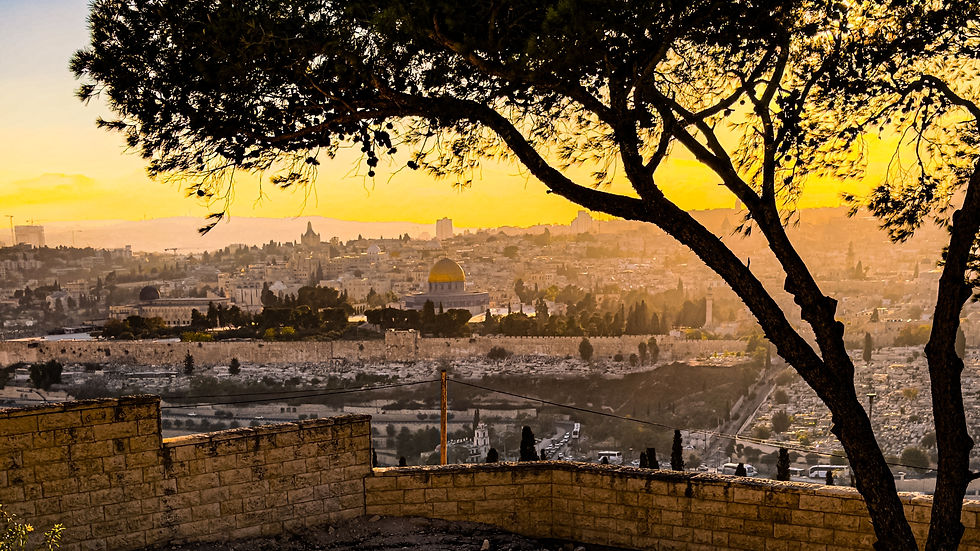
To ask why Jerusalem has seventy names is to ask how a people have tried, for three thousand years, to speak about the most beloved place on earth without ever finding the single word that contains it.
A Jerusalem Chorus Drawn from Scripture
The list appears in several Midrashic sources, most notably the Aggadat Bereshit and the Yalkut Shimoni, which trace each name to a specific verse in Tanakh. Some are familiar even outside the tradition. Zion, perhaps the best known, evokes the citadel David captured from the Jebusites and later became shorthand for the entire city and its longing. Moriah is the mountain where Abraham bound Isaac and where Solomon built the First Temple. Ariel, meaning Lion of God, comes from Isaiah and conjures the Temple altar, described by the prophets as a hearth of divine fire. Each name is a doorway into a different chapter of the city's story.
Other names are stranger and more intimate. Jerusalem is called Kallah, the Bride, drawing on the prophetic image of God and the city as lovers separated and reunited. She is called Betulat Bat Tzion, the Maiden Daughter of Zion, an image of vulnerability and dignity. She is Neveh Tzedek, the Abode of Righteousness, and Ir HaElokim, the City of God. She is even called simply HaIr, The City, as if no further description were needed, as if there were no other.
The Weight of the Number Seventy
Why seventy? The number is never accidental in Jewish thought. Seventy nations descended from Noah's sons in the table of nations in Genesis. Seventy souls went down to Egypt with Jacob. Seventy elders stood with Moses at Sinai. The Sanhedrin, the supreme Jewish court, had seventy members plus a presiding head. The sages teach that the Torah itself has seventy faces, seventy legitimate ways of being interpreted. Seventy is the number of completeness within human experience, the full range of perspectives a thing can hold.

When tradition assigns Jerusalem seventy names, it is making a precise theological claim. The city is not merely one place among many. She has seventy facets, one for each nation and each angle of human longing. Just as the Torah speaks in seventy voices, Jerusalem answers in seventy names. The number insists on a place that cannot be reduced to a single identity, a place that holds something for every person who turns toward it.
There is also a more painful dimension to this multiplicity. Many of the names emerge from prophetic poetry written during catastrophe. Lamentations calls Jerusalem the Widow, the city that sat alone after the Babylonian destruction. Isaiah calls her Forsaken and Desolate, then promises she will be renamed Hephzibah, My Delight Is in Her, and Beulah, Married. The names move through grief and restoration, exile and return. To recite the seventy is to walk through the emotional history of a people, from coronation to ruin to consolation. The city carries her names like a memory carries scars and hopes at once.
The Midrashic instinct here is also linguistic and mystical. Hebrew tradition holds that the true name of a thing reveals its essence. To give a place one name is to fix it, to limit it to a single meaning. To give it seventy is to insist that its essence overflows any single word. The kabbalists later developed this idea further, treating the multiplicity of names as a hint that Jerusalem stands at the meeting point of heaven and earth, where divine reality refuses to be contained in any one human language.
Names That Carried the City Through Exile
The seventy names also functioned as a tool of memory in exile. For nearly two thousand years, most Jews lived far from Jerusalem, and the names became a way of holding the city in mind when the city itself was inaccessible. In prayer and liturgy, Jews addressed Jerusalem by many of these names, weaving them into blessings and into the words spoken under every wedding canopy: "If I forget you, O Jerusalem, let my right hand forget its skill."
To this day, the seventy names function less as a list to be memorized than as an invitation. They suggest that no single visitor, scholar, or believer will ever exhaust what Jerusalem means. Each generation arrives, finds the name that speaks to it, and adds its voice to the long chorus.


Contacts on https://xfinity.pissedconsumer.com/review.html I switched to Xfinity for my internet and TV, and honestly, it’s been a mixed bag. The speeds are pretty solid, and streaming is smooth most of the time, but I’ve had a few hiccups with the service dropping out during peak hours. The customer support could use some work too; I waited on hold longer than I’d like to admit. Overall, it’s decent for the price, but I’m hoping they can iron out the kinks.