


When Israel and Venezuela Were Friends

Have you ever heard that Israel and Venezuela used to be friends? Most people today would laugh at the question, after all, Venezuela’s now jailed dictator Maduro have ranted against Israel like clockwork. But there was a time when the two nations stood together, cooperated, and even celebrated each other’s victories. This isn’t nostalgia, it’s a historical fact worth remembering because it shows how geopolitics can shift, and how alliances rooted in shared values and mutual benefit can be torn apart by ideology and opportunism.
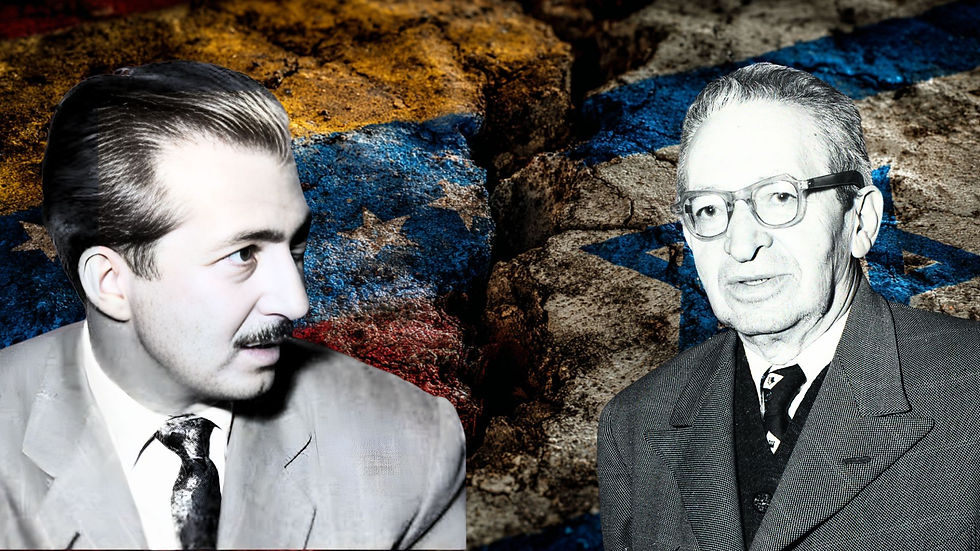
A Relationship Born in Optimism
Right after Israel declared independence in 1948, very few nations were willing to extend diplomatic recognition. But Venezuela wasn’t one of the hesitant. In March 1949, Venezuela became one of the early Latin American countries to establish formal diplomatic relations with the young Jewish state. Back then, relations were straightforward: two sovereign nations trying to find their place in a turbulent post‑war world.
This was the era when countries didn’t just shout slogans, they built real partnerships. Israel was pioneering in agriculture, water management, and nation‑building. Venezuela was rich in oil but thirsty for technological progress. The cooperation made sense: pragmatic, mutual, forward‑looking.
In the 1950s and 1960s, Israeli expertise was welcomed in Venezuela. Israeli agricultural experts advised on irrigation and desert farming techniques, invaluable in parts of South America where water was as precious as black gold. Venezuela’s Universidad Central hosted exchanges; technical delegations traveled back and forth. For a while, it seemed like a genuinely positive alliance.
This was not an accidental friendship. It was built on mutual respect and shared goals. Imagine a small country focused on survival and innovation working with an oil giant hungry to diversify its economy. It was practical. It was real.

The Cold War Context
In the 1950s and 1960s, Israel was carving out its space among non‑aligned and developing nations, and Venezuela was a pivotal Latin American state. Both were navigating between the U.S. and Soviet spheres. Israel, of course, was getting support from the West, while Venezuela flirted with both sides depending on oil politics.
But despite Washington’s sway in Caracas and Jerusalem, the two countries found room to cooperate. Israel supplied military gear, agricultural tech, and expertise. Venezuelans saw Israel less as a distant Middle Eastern conflict actor and more as an emerging nation that had “made it” against all odds.
The Golden Years: A Case Study in Diplomatic Goodwill
If you want a compelling example of how warm relations once were, look to the 1970s and 1980s. Venezuelan military officers trained in Israel. Venezuelan students studied Hebrew and Jewish history. Conferences were held. Venezuela even stood with Israel in some international forums when the alternatives were anti‑Israel rhetoric or politicized condemnations.
This was not tokenism; this was real engagement. It reminds me of Psalm 133:1: “Behold, how good and how pleasant it is for brethren to dwell together in unity!” On paper, it sounds quaint, but in practice, especially between two nations separated by geography and culture, it was remarkable.

The Turning Point: Ideology Over Realpolitik
So what happened? How did Venezuela go from being a partner of Israel to one of its harshest critics?
The roots trace back to the rise of Hugo Chávez in the late 1990s. Chávez came in with a revolutionary zeal and a deep resentment of the “old order,” which in his mind included alignment with the West. Israel, in his rhetoric, became a symbol of American imperialism. Logic didn’t matter, historical ties didn’t matter, facts didn’t matter, what mattered was the narrative.
By the mid‑2000s, Chavez’s rhetoric escalated into outright hostility. In 2006, he expelled the Israeli ambassador after the Lebanon war. In 2009, Venezuela cut diplomatic relations completely in response to Israel’s military actions in Gaza. Just like that, decades of cooperation were erased.
Understand this: this wasn’t a protest over negotiation failures or trade disputes. This was about ideology. Chávez embraced leaders like Mahmoud Ahmadinejad of Iran, turning Venezuela into a loudspeaker for anti‑Israel propaganda. That shift wasn’t rooted in Venezuelan interests, it was rooted in Chavez’s personal worldview and his desire to posture against the United States.

Why the Friendship Matters Today
Many people shrug at this history, thinking it’s ancient news. But it matters because it tells us something critical about international relations: friendships between nations are not immutable. They require maintenance, shared respect, and above all - a commitment to truth over political posturing.
When Venezuela turned away from Israel, it did so not because of any breach of trust by Israel, but because Chavez wanted enemies to justify his internal narrative. He needed scapegoats. Israel became one.
That betrayal of history is important for the world to see. Israel didn’t abandon Venezuela; Venezuela abandoned Israel. And in doing so, it abandoned a chapter of its own history when cooperation brought technology, prosperity, and mutual respect.
At its peak of the Israel‑Venezuela relationship, Israeli agri‑engineers helped Venezuelan farmers. Venezuelan officers gained training. Exchanges brought understanding. It wasn’t perfect, no diplomatic relation ever is, but it worked.
Today’s Venezuela, crippled by economic collapse and political repression, stands in sharp contrast to that era when Caracas opened its doors to collaboration. There’s no simple causation, countless factors contributed to Venezuela’s downfall, but the severing of international partnerships certainly didn’t help.
The Legacy and the Hope
As regimes change, ideologies fade, and peoples remember what worked in the past. The seeds of cooperation never completely die, they just wait for a climate where truth, respect, and mutual interest can grow again.
Maybe one day, Venezuela will return to relations that benefit its people rather than its leaders’ egos. Maybe Israelis and Venezuelans will again find common ground.
At the end of the day, the story of Israel and Venezuela is not just diplomatic trivia. It’s a reminder that friendships between nations are possible even across oceans and cultures, but they’re fragile, and they must be guarded with truth, courage, and a refusal to bow to political theatrics. And if Venezuela ever rediscovers that chapter of its own history, the world will be better for it.


Until now, I never knew much about Venezuela.
Thanks, Hananya, I'm learning something new.
And I stand with Israel - forever🫂🙏🏼🇮🇱❤️
Daniela