


The Israel Palestine Conflict Explained in Plain English

Updated: 38 minutes ago
Most people who argue about Israel online could not tell you why the Palestinian state they demand was never created, and the real answer will surprise you.
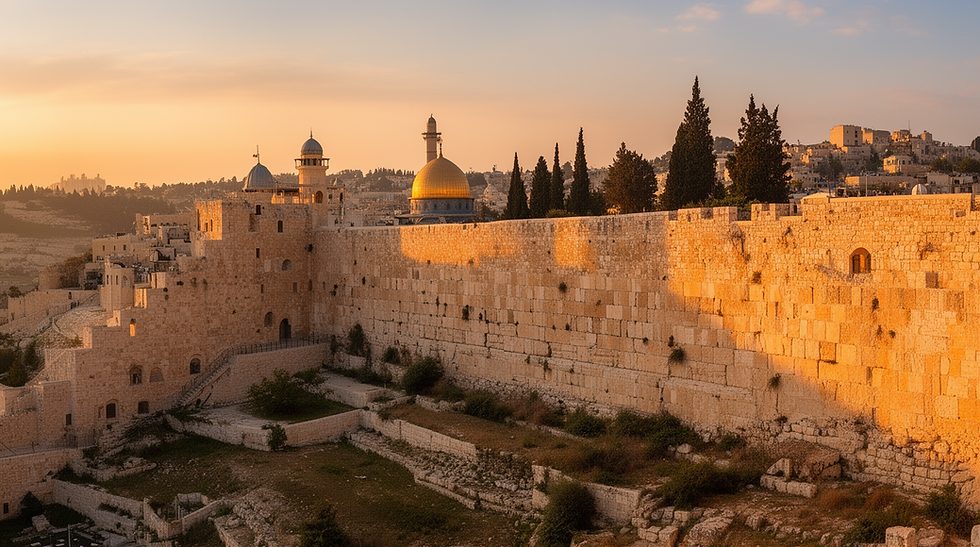
I was born and raised in Israel, and I have spent years answering questions about this conflict from people all over the world. So here is the Israel Palestine conflict explained the way I explain it to a friend over coffee, with the history you rarely hear on the news.
The Jewish people come from this land. Jerusalem was King David's capital about three thousand years ago, and the two Temples stood on the Temple Mount for roughly a thousand years combined. After the Jewish revolts against Rome, the Romans renamed Judea as Syria Palaestina around 135 CE to erase the Jewish connection, and that is where the name Palestine comes from. Jews never fully left, and for nearly two thousand years families around the world ended their Passover Seder with the words Leshana haba'a b'Yerushalayim, next year in Jerusalem.
Under centuries of Ottoman rule there was never a Palestinian state or a Palestinian king. When the Ottoman Empire collapsed after World War One, Britain took control under a League of Nations mandate that explicitly recognized the historical connection of the Jewish people with the land.
The Israel Palestine conflict explained in its modern stages
On November 29, 1947, the United Nations voted to divide the land into a Jewish state and an Arab state. The Jewish leadership accepted the plan, while the Arab leadership rejected it and went to war. That single decision explains more about this conflict than anything else, because a Palestinian state could have been born that very day.
Israel declared independence on May 14, 1948, and five Arab armies invaded. Around seven hundred thousand Arabs left or were displaced during that war. The world rarely mentions that around eight hundred fifty thousand Jews were expelled from or fled Arab countries in the years that followed, and Israel absorbed them. For the next nineteen years Jordan ruled the West Bank and East Jerusalem and Egypt ruled Gaza, and neither of them created a Palestinian state.
In 1967 Arab armies massed on Israel's borders and Egypt closed the Straits of Tiran, so Israel struck first in the Six Day War. Israel took the West Bank, East Jerusalem and Gaza, and Jews prayed at the Western Wall for the first time in nineteen years. A few months later the Arab League met in Khartoum and answered with its famous three noes: no peace, no recognition and no negotiations with Israel.
Israel made peace with Egypt in 1979 and handed back the entire Sinai, and it made peace with Jordan in 1994. It signed the Oslo Accords with the PLO in 1993, which created the Palestinian Authority. In 2000 and again in 2008, Israeli prime ministers offered a Palestinian state on nearly all of the West Bank and Gaza with a capital in East Jerusalem. Yasser Arafat walked away from the first offer and the Second Intifada followed, and Mahmoud Abbas never gave an answer to the second.
In 2005 Israel withdrew every soldier and every Jewish community from Gaza. Hamas won Palestinian elections the following year and seized full control of Gaza in 2007 after a violent fight with Fatah. Instead of building a state, Hamas built tunnels and rocket factories and fired thousands of rockets at Israeli towns over the years that followed.
On October 7, 2023, Hamas terrorists broke through the border and murdered about 1,200 people, most of them civilians, in the deadliest day for Jews since the Holocaust, and they dragged 251 hostages into Gaza. The war that followed is the war Hamas chose.
Today a US backed framework ties the future of Gaza to the disarmament of Hamas, while in the West Bank the Palestinian Authority has once again postponed the elections that Mahmoud Abbas has avoided for two decades.
Why peace has not come yet
Every time Palestinian leaders were offered a state beside Israel, they turned it down, because accepting it meant accepting a Jewish state permanently next to them. Hamas says so openly, and its founding charter calls for the destruction of Israel. Israel's peace treaties with Egypt and Jordan, and the Abraham Accords with the UAE, Bahrain, Morocco and Sudan, show that Israel makes peace with any neighbor willing to accept that it exists.
Real peace will come on the day Palestinian schools teach children to build a future alongside Israel and Palestinian leaders accept that the Jewish people have come home to stay. Until that day, Israel will keep defending itself, and anyone who truly wants peace should put their pressure on the side that keeps saying no. Am Yisrael Chai.
Keep reading: the questions people ask most


Comments