


The 60-Day Iran Deadline Expired. What Now?

The Iran deadline expired and Iran did not surrender, it did not open the Strait of Hormuz, and according to a Wall Street Journal report it spent the entire negotiating window doing the one thing nobody in Washington wanted to say out loud: getting ready for a bigger war.

What actually happened when the Iran deadline expired?
The memorandum signed in June gave the United States and Iran a sixty day window to reach a real agreement. The window closed. There is no agreement. An Iranian official told reporters flatly that there are no talks about an extension, and claimed the Americans violated the interim accord almost immediately after signing it. Iran's Revolutionary Guard called Trump's talk of a backchannel "fantasies" and "delusions," while a senior IRGC official promised "strategic surprises" ahead and said Iran is shifting to an offensive posture.
Meanwhile the Wall Street Journal, citing Iranian and Arab officials, reported what Tehran was actually doing while the diplomats talked. It ramped up production of missiles and drones. It rebuilt what earlier strikes destroyed. It handed the Revolutionary Guard more authority and installed veterans of past wars in the top security jobs. It sent advisers to militias in Iraq, Yemen and Lebanon to coordinate an expansion of the fighting. It positioned missiles, naval weapons and drone launchers looking out over the Red Sea. Arab intelligence officials described it as a strategic shift to get Iranian forces ready to widen the war.
An Iranian defense analyst quoted in that reporting said there is a widespread view inside Iran that the main war has not yet begun. Another adviser called this the calm before the storm.
Why the Iran Oman deal on the Strait of Hormuz is a trap
Right as the clock ran out, Tehran produced a rabbit. Iran's foreign ministry spokesman Esmaeil Baghaei announced an understanding with Oman on a transit route map through the Strait of Hormuz. Ships would enter along the Iranian coast and exit along the Omani side. During a transition, no tolls, no fees. Details pending. Joint statement coming.
It sounds like progress. It is the opposite.
Look at what the arrangement does. It puts Iran and Oman in charge of the world's most important waterway and leaves the United States standing outside the room holding a blockade it now has to justify. It says nothing about enrichment. Nothing about the nuclear program. Nothing about the militias in Iraq and Yemen and Lebanon that Iran was busy briefing while this was being drafted. It converts a criminal act, the closure of an international shipping lane, into a negotiated privilege that Iran gets to grant and therefore gets to revoke.
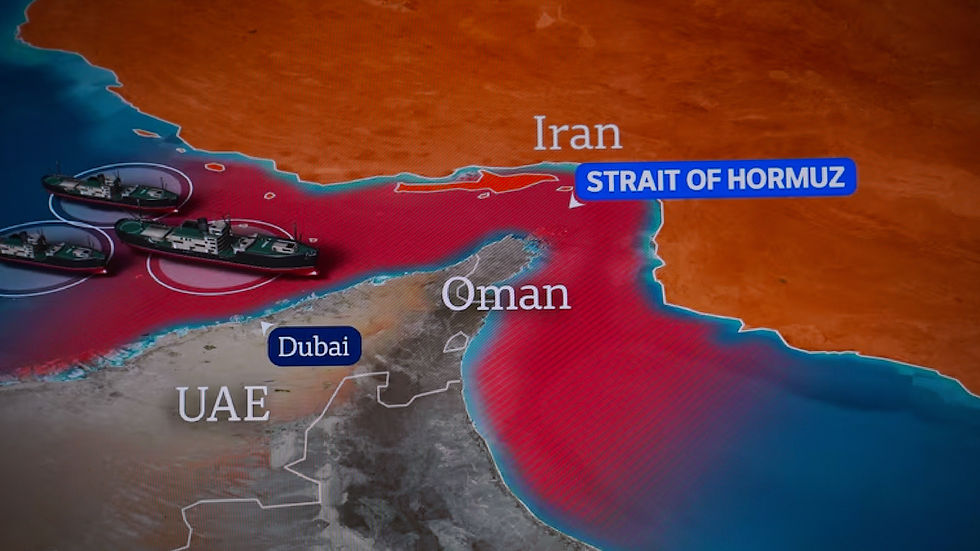
Iran's deputy foreign minister Kazem Gharibabadi said the quiet part into a microphone. The Strait of Hormuz, he said, belonged to Iran in the past, belongs to Iran today, and will remain Iranian territory in the future.
Trump, for his part, told Fox News that Iran will not make the kind of deal he thinks is necessary, that he has no time schedule and is not in a hurry, and that Iran should put up the white flag of surrender. He also warned that if Oman gets in the way, in his words, the United States will bomb them. Whatever you think of the language, the instinct is correct. A side deal that reopens the water while leaving the centrifuges spinning is bad news.
What most of the coverage is getting wrong about Iran and the war
Watch how the story is being framed. The headlines are about a stalled peace process, a president stuck in a quagmire, a deadline that slipped. The subject of every sentence is Washington. Iran appears as weather, as a condition, as something that happens rather than something that decides.
That framing is not neutral. It quietly assumes Iran wants an agreement and is merely difficult to satisfy. The reporting from inside Iran says the opposite. Iran wanted the calendar, not the deal. Sixty days of protection from the worst consequences is worth more to a regime rebuilding its missile lines than any signed paper, because the paper can be broken later and the missiles cannot be unbuilt.
Israelis learned this lesson at a price. Every framework in this region that gave a terror army time instead of taking away its weapons ended the same way. Southern Lebanon was supposed to be demilitarized under international supervision, and Hezbollah built a fortress under the noses of the peacekeepers who were there to prevent exactly that. Gaza was supposed to be an opportunity, and it became a launch pad. In each case the world congratulated itself on a process while the other side used the process as cover.
So when Israeli officials warn that Iran is exploiting negotiations to prepare an escalation, that warning does not come from paranoia. It comes from experience.

Roughly a fifth of the world's oil and liquefied gas moves through the Strait of Hormuz, and because the price of everything you buy is quietly attached to it. Iran cannot beat the United States on a battlefield and it knows that. So it fights where it can win, at the pump, in the shipping insurance market, in the patience of Western voters who did not sign up for a long war and would like the gas station to stop hurting.
This is the actual Iranian theory of victory. Not conquest. Attrition. Make the war expensive for people who live thousands of miles away, and let their politics do the rest. Every month the strait stays contested, Iran collects leverage without firing a shot at an American.
And notice who is absorbing the damage that never makes your evening news. Houthi drones have hit Saudi energy infrastructure. A cargo ship was struck in the Bab al Mandab and sailors died, men from Pakistan and elsewhere who had nothing to do with any of this. Iranian missiles have flown toward Jordan. American bases have been attacked. Emirati vessels have been hit. This was never about Palestinians. It was never about Israel alone. It is one Iranian war with branch offices, and Israel is simply the branch that fights back hardest.
Three things to watch. Whether the Iran-Oman understanding becomes a signed arrangement that Washington accepts, which would be the moment the blockade loses its purpose. Whether the Revolutionary Guard's promised strategic surprises arrive as attacks on shipping, on Gulf energy sites, or on American positions. And whether anyone in Washington finally states the obvious condition out loud: no reopening of that waterway without verified, permanent limits on the nuclear program, checked by people with the authority to say no.
Because there is one lesson this region teaches over and over, and every generation pays tuition to learn it again. A deadline that passes without consequence is not a deadline. It is a gift. Iran just unwrapped it.


Comments